Tuesday, August 29, 2006


The limits are endless...

I've discovered a way to post a photo to my Blog...

Stay tuned for the new and improved version of The Squad Room!!!

Monday, August 28, 2006


THE DETECTIVE COMMANDER�S INVESTIGATIVE PLAN: GREAT BRITAIN STYLE

During a recent visit to New York of some visiting Metropolitan Police investigators (Scotland Yardies), I had the opportunity to discuss homicide investigations, and the role of the Squad Commander in London policing.

I learned that the major task of the Squad Commander (the Detective Chief Inspector) was to commit to writing his/her �Investigative Plan�.

Enacted several years ago, this is intended to be used to show at what stage an investigation is currently in, and what facts are being utilized to determine the next stages of an investigation.

This task consumes the majority of the commander�s time � even more than we spend providing Compstat updates to the armies that require them!

The Detective Commander must, in writing, indicate what course of action he has directed the Detective Inspector to pursue, and what his reason for this is based on.

Try and think what that would involve on your investigations, and you can get a small understanding of the magnitude of this task.

In this manner, the reason why a particular person may be brought in for an interview must be delineated, what the basis of this interview will be about, and what is hoped to be obtained � all committed to a written report by the Commander.

A cumbersome task for sure!


WHO THE HECK IS JOHNNY CORDES?

Department historians, and buffs in general, should recall the name �Johnny Cordes� in the history of the NYPD.

Cordes (pronounced COR-des � his father was Alsatian) was appointed to the department on August 24, 1915.

When he retired as a Lieutenant � Squad Commander in 1950 he had the distinction of having been awarded the Medal of Honor on two separate occasions.

While still in the Police Academy he was taken out and put into plainclothes work, as his youthful appearance was put to good use. He was appointed a Detective on February 11, 1918, and worked variously in the Strongarm Squad and various other squads, but spent most of his time in the Main Office Squad out of Headquarters.

It was in 1924, and again in 1928, as a Detective, that he was awarded the Medal of Honor for his actions, on both occasions, during a shootout from commercial robbery incidents.

He was promoted to Sergeant on February 15, 1928, remaining in the Detective Divisiion, and on March 2, 1934 he was made an Acting Lieutenant. He commanded the Riverfront Squad from 1938 until his retirement in 1950.

In 1940, upon his achievement of 25 years of service with the department, the members of the Riverfront Squad presented him with a solid-gold Lieutenant�s badge � slightly smaller than the actual shield � engraved on the reverse side with his name and the recognition for service.

Within the past month I have acquired this solid gold shield, and am making arrangements for a suitable display of such a notable item.


MULTIPLE AWARDS OF THE MEDAL OF HONOR

Since the modern medal era came into being in 1915, when the name of the highest NYPD award �The Department Medal� was changed to �The Medal of Honor�, only three members of the NYPD have been awarded the Medal of Honor twice.

Only one of these recipients, JOHNNY CORDES, lived to receive his second award. The other two were awarded them posthumously.

The first multiple award was to Detective Timothy J. Connell who was awarded the Medal of Honor in 1922, after he was wounded during a shootout in which he killed a hold-up man. He also received a posthumous award of the medal in 1926, after he was killed in another shootout with four criminals in 1924.

The second multiple award was to Detective John Cordes. He received the medal in 1924 after a shootout in which he was wounded five times during a stickup in a store. He received it again in 1928 for a second shootout.

The third recipient was PO Robert Bilodeau, Street Crime Unit, who was awarded the medal twice, posthumously, at the 1981 Medal Day Ceremony. The first award was for an incident on April 5, 1979, when while making an arrest his throat was slashed, an injury that required 63 stitches to heal. The second award was for an incident on February 12, 1980, when he chased a gunman into an alleyway. The gunman turned and shot Bilodeau three times. Before he died he was able to wound his assailant.


THE DEFINITION OF POLICING

The word "Police" means, generally, the arrangements made in all civilised countries to ensure that the inhabitants keep the peace and obey the law. The word also denotes the force of peace officers (or police) employed for this purpose.

In 1829 Sir Richard Mayne wrote:
"The primary object of an efficient police is the prevention of crime: the next that of detection and punishment of offenders if crime is committed. To these ends all the efforts of police must be directed. The protection of life and property, the preservation of public tranquillity, and the absence of crime, will alone prove whether those efforts have been successful and whether the objects for which the police were appointed have been attained."

In attaining these objects, much depends on the approval and co-operation of the public, and these have always been determined by the degree of esteem and respect in which the police are held. One of the key principles of modern policing in Britain is that the police seek to work with the community and as part of the community.


COPPERS BY ANY OTHER NAME�

In New York we simply call them �cops�.

In Chicago, the slang becomes �coppers�.

Well, in London, the police are slangly referred to as �Old Bill�. But why?

According to the Official Encyclopedia of Scotland Yard, there are about a dozen possibilities for the origin of the phrase:

Old Bill referred to King William IV who came to the throne in 1830, a year after the Metropolitan Police were founded.

Old constables of the watch were sometimes nicknamed for the bills or billhooks they carried as weapons

The 'old bill' was in Victorian times a bill presumed to be presented by the police for a bribe to persuade them to turn a blind eye to some nefarious activity

In the 1860s a popular Sergeant Bill Smith at Limehouse was referred to as 'Old Bill'

Many police officers did wear authoritarian looking 'Old Bill' moustaches like Bruce Bairnsfather's famous WW1 cartoon character, the wily old soldier in the trenches. In 1917, the government adopted Bairnsfather's cartoon character in posters and advertisements putting over wartime messages under the heading 'Old Bill says..' and for at least some of these, the figure was dressed in Special Constable's uniform.

The original vehicles used by the Flying Squad (the mobile force of the Metropolitan Police of London) had registration plates with the letters BYL.

According to the late author Robin Cook, 'old bill' is a racing term for an outsider or unknown quantity; hence a dodgy prospect for an illegal gambler's point of view.

All rather interesting theories nonetheless, but not as practical as the copper buttons used on American police uniforms being interpreted to the now familiar police term � �Cops�, shortened from the proper (Chicago) �Coppers� term.


IN MEMORIAM: PO MICHAEL RUSSELL

The summer of 1979 was a sad time for this department.

PO Michael Russell of the 75 Pct, who was 30 years old at the time, was the first of four officers slain that summer within a span of 45 days.

PO Russell was at bat during an evening softball game on August 2, 1979, between off-duty 75 Precinct police and a neighborhood team in the East New York section, when an argument broke out between a civilian player and three men who had strolled onto the outfield.

One of the men drew a revolver and fatally shot the player in the abdomen. Though unarmed PO Russell led a contingent of police in pursuit, cornering the gunman in a nearby garden. In a struggle PO Russell was mortally shot, and the gunman and Sgt. Donald Keneally were wounded.

On the force nine years, PO Russell was cited twice for bravery. He left behind a wife and 2 children.

Friday, August 25, 2006

LOOKING OVER THE SPRING

I�ve made mention here numerous times in the past how I collect, and enjoy reading, old issues of the department�s magazine, SPRING 3100.

As most of you could relate to growing up reading Sports Illustrated, and looking back at old issues that bring back memories � I do the same with the Spring magazines, especially those from the 1960�s.

My father was sworn into the department in 1956, and retired in 1990. I can recall awaiting each new issue of the magazine to be brought home by him, and even today I will recall a particular cover, or read an item, that I will remember having seen or read in those �old days� of childhood. (What can I say? Does �buff� mean anything?)

I remember not too long ago asking Dad whatever happened to those boxes of Spring magazines that were in the basement � and finding out they were �thrown away � they were old and taking up space!� We don�t share the same aficionado of police history, you could say.
Well, just the other day Sgt. Bob Kelly of the 90 Squad made my day (well, not exactly, but it was a bad day up to then) handing over some old Spring magazines he came across, with issues dating from 1959-1961. I�ll certainly have more to write on some of the topics covered in them in future postings, but for now I thought I�d share the following.

I always enjoy perusing the �Looking �Em Over� section of the magazine. That�s the section where the precinct/command reporters write on the goings-on in their command for the month. Just like we have now in the current Spring magazine.

I always browse through, looking first at the 79 Precinct entry � where my father started his career and worked until 1969 � then looking over the other entries, and generally I will always come across a name from my past. People who worked with my father in the 79 that I knew, names I�ve heard him mention, even those who grew to be life-long family friends. You get the picture.

Once in a while I will even come across a blurb about my farther, Freddie Cornicello.

Looking through the latest issues I see names mentioned for good collars � names from my past like Manzo making a homicide collar, Palumbo returning from a stint in the Army, Fineo for a Burglary arrest. Here�s one that notes Priola made a gun collar, Manzo made a Burglary collar, and Zigo in the 73 arrested 3 for a robbery pattern of cab drivers. Manzo again making a GLA arrest � Vinny Manzo sure was an active cop in the 79!

Then I came across this item.

�Anyone interested (especially pitchers) in being a member of CORNICELLO�S BOMBERS, see Freddie in the 124 Room.�

Come to think of it, anytime I�ve seen Dad mentioned in the Precinct report, it�s had something to do with the softball team, or the bowling team, or the promotion �racket� he ran.
As is often said, work should be fun!


IRON MEN AND WOODEN SHIPS

The department�s Annual Report of 1885 mentions the qualifications for a police candidate.

There was first a physical exam that needed to be passed, then an Intellectual Exam, which tested the candidate on general knowledge, �to insure an intelligent performance of police duties.�

The police candidate had to be able to read and understand English �understandably�. He also and to be US citizen and a resident of New York State for at least 1 year prior. The physical qualifications included being not over 30 years of age, and at least 5 feet 7 � inches tall, and at least 140 pounds.

If qualified, the candidate went to the Chief Clerk to get an application form. He then had to obtain signatures of 10 persons who could vouch for his character. These people had to also state that they had �never seen him drunk or heard of him having been drunk�.

The Chief Clerk would then make an inquiry with the candidate�s local precinct captain, before scheduling the physical exam.

Having passed the physical exam, the Intellectual exam, and the investigation, he was then placed on a list of qualified applicants, to which the Board of Police would review and make a selection for hiring.

Before being appointed, the candidate had to also sign a statement declaring if he �ever had rheumatism, a fit of any kind, or piles, and how long since�, and lastly had to answer if he had �paid, or promises to pay, or given any money or consideration to any person, directly or indirectly, for any aid or influence towards procuring your appointment�.

The salaries in 1885 were noted as $2,000 for a Captain, $1600. for a Sergeant, and $1,000 for Patrolman 3 Grade. After having served for 1 year, the Patrolman rose to Patrolman 2 Grade and received $1100 per year, and after 3 years went to Patrolman 1 Grade with the top pay of $1200 per year.


INTERESTING WEB SITES

Local Crime Mapping
http://www.ojp.usdoj.gov/nij/maps/links.html

The National Institute of Justice maintains a frequently updated list of links to cities and counties nationwide that have online crime mapping. Some sites, such as the one operated by Oakland, California, are searchable by date, zip code, police beat and type of crime. San Diego has a sophisticated system that allows for searches by address. The Los Angeles crime map also includes incident report numbers.


Educational Institutions
http://nces.ed.gov/globallocator/

Find a private or public school, college or library at the National Center for Education Statistics, searching by name of school, city or zip code. Add a radius range of 1 to 50 miles to get other area institutions.


Finding a Phone on a Map
http://www.bandwidth.com/wiki/article/NPA.NXX

Take the first 6 digits of a North American telephone number and instantly plot it on a map. The NPA-NXX Geolocator, USA/Canada phone prefix location lookup tool, is useful for quickly finding the town in which the phone number is located, because, as we know, the exact location can�t be determined.


All things telephony are elucidated at the Telephony Wikipedia page http://en.wikipedia.org/wiki/Category:Telephony


THE PATROL LIEUTENANT � 1964

The 1964 Self Portrait of Spring 3100 outlined the various duties and functions of the patrol force, and in particular the Patrol Organization.

It was noted that the patrol precinct commander, the captain, was assisted by four Lieutenants.

These �desk� lieutenants worked a four day, eight hour tour around the clock with a forty-eight hour swing. In the absence of the captain, they were in charge of the precinct.

Ask any �old-timer� and they will tell you exactly how in charge the desk lieutenant was back then � nothing, and I mean nothing, went on that the desk lieutenant didn�t know about.

And don�t ever have tried to �get over� on the desk lieutenant � it wouldn�t be long before you paid for your action.

Thursday, August 24, 2006

REDESIGNED MEDAL OF HONOR � 1973

Sixty years after the Medal of Honor replaced the Department Medal as the NYPD�s top award for valor, the department decided to change its design.

In 1972, a contest was announced to pick a design for a new medal. The winner was Ptl. Alfred Young, a police historian and later curator of the Police Museum. His design was based on the star-shaped badge worn by the New York City Municipal Police Department officers from 1845 to 1857. The medal hangs from a green ribbon on which 12 white stars are clustered. A top bar is inscribed with �Valor�. A gold palm leaf on the ribbon indicates a second award. Since 1997, the medal has been made of gold.

The first presentation of the new medals were made on October 23, 1973, to the widows of five officers: Gregory Foster and Rocco Laurie, 9 Pct., Elijah Stroud, 88 Pct., Phillip Cardillo, 28 Pct., and Det. William Capers, 16 B/L Sqd, who were slain in the line of duty during 1972. Two other awards of the Medal of Honor were also made that day to Sgt. William Manos, ESD 4, and Officer Frank Buono, Bx. FSA.

At the 1985 Medal Day ceremonies the first awards of the NYPD Medal of Honor to a female police officer were made to PO Tanya Braithwaite, 41 Pct, and PO Sharon Fields, 40 Pct. Each officer had engaged in a shootout with a gunman who had just murdered another police officer.

It is noted that in 1984, a female police officer with the NYC Transit Police Department, Irma Lozada, was killed in the line of duty and awarded the Transit Police� Medal of Honor posthumously.

Since 1921, when posthumous awards were first made, approximately 70% of the Medals of Honor awarded have been to officers who died in the line of duty, with the majority killed in shooting incident.


IN MEMORIAM: PTL. DANIEL NEVILLE


On August 27, 1921 Ptl. Daniel J. Neville of the 23rd Precinct (Midtown South) was killed in the line of duty.

Ptl. Neville entered a lot at 39th St. and Eleventh Ave. to investigate a report that a group of young gangsters were using the watchman�s shanty for card games and for the distribution of drugs. When he was about five foot from the shanty he was shot in the left chest, which resulted in his death. Witnesses had reported that they saw one man run out of the yard and that two men were seen climbing over the fence of the year after the shot.

Ptl. Neville was appointed to the NYPD in 1907; he was married and the father of five children. Ptl. Neville was Posthomously awarded the NYPD Medal of Honor.

(Special Note: In 1918, One of Ptl. Neville�s former partners, Ptl. Joseph Nolan, was killed in front of 526 W. 39th Street by a brick thrown from the roof ).


IDENTITY THEFT INVESTIGATORS GUIDE AVAILABLE

A recently release publication by the national Institute of Justice focuses on the ever increasing problem of Identity Theft.

Law Enforcement Agencies and Identity Theft, (NCJ 205701) a 64 page booklet, is a new COPS POP Guide, addresses the problem of identity theft, and reviews the factors that increase the risk of it. Identity theft is a new crime, facilitated through established, underlying crimes such as forgery, counterfeiting, check and credit card fraud, computer fraud, impersonation, pickpocketing, and even terrorism.

You Can Access full text at COPS Online:
http://www.cops.usdoj.gov/mime/open.pdf?Item=1271


CRIME BEAT, BY MICHAEL CONNELLY

Michael Connelly is better known as the best-selling author of the Harry Bosch series of crime novels, all taking place in Los Angeles. His more popular works include THE CLOSERS and THE NARROWS, along with the bestselling novels THE LINCOLN LAWYER and BLOOD WORK.
Connelly got his start as a journalist, working as a crime reporter in South Florida covering the detectives who worked the homicide beat.

His latest book is a collection of some of his true crime stories, taken from these earlier newspaper pieces. It will make a decent �summer read�, as I found it to be somewhat interesting, but probably a lot more so for someone who doesn�t do this every day for a living.

I particularly found interesting two items that he mentions early on in this book, in his first chapter, taken from the story he wrote for the Florida Sun-Sentinel in 1987 after spending a week with the Ft Lauderdale Homicide Squad.

He describes homicides in two categories � �whodunit� cases and �smoking gun� cases. These are the cases I have heard referred to as �mysteries� and �ground balls�.

No matter where you are some things never change when it comes to homicide investigations.

One of them is time.

�There is a rule to murder investigations; as more time elapses in a case, the chances of solving it grow slimmer�.

This is one of the key points I try to bring out when teaching at the Homicide Course and instructing new detectives. He also states that �whenever possible, depending on constrictions of time, the overtime budget, fatigue and so on, all available hands are put on the initial stages of a case�.

That�s the very point I make when I discuss the �24 & 72 Rule� of homicide investigations � go back on your victim�s last 24 hours to help decipher the motive, and the suspect; and the effort you put into the first 72 hours of the investigation will lay the foundation for success or failure in your investigation.

The second item of interest is one that many of the veteran detectives will also appreciate, and one that Ret. Capt. Frank Bolz brought to my attention several years ago.

On the wall in the Ft. Lauderdale Homicide Squad�s office was a sign that says �Get off your ass and knock on doors.�

GOYAKOD, the sign that Frank remembered hanging on the squad room wall when he started as a new detective in the 81 Squad back in the early 60�s, and the sign that hangs on the Brooklyn North Homicide Squad office today.

Rule number one in detective work � getting someone to talk to you and tell you what happened. Sometimes the only way to do this is to �pound the pavement�, doing what �gumshoe� work is all about � knocking on doors and talking to people!

Some things never change.


SGT. PATRICK BENEVENTI HONORED

As noted in a recent NY POST article, on June 16, 2004, Sgt. Patrick Beneventi of the 109 Pct. was recently honored.

On June 16, 2004 Police Commissioner Ray Kelly presented the Theodore Roosevelt Award - which honors NYPD cops who survive a medical hardship - to a Queens sergeant who fought back against cancer.

"I had a little bad luck with my health. Thank God everything is OK. I had a little surgery and I feel fine now," said Sgt. Patrick Beneventi.

Beneventi became ill in July 1999 and underwent surgery to remove a malignant tumor from his spine. He returned to work - only to be twice diagnosed with prostate cancer, but he has been cancer-free since March 2003.

The Roosevelt Award honors the legacy of the former NYPD commissioner and childhood asthma victim who became the 26th president.

Kelly lauded Beneventi not only for beating his illness, but for supervising three cops from the 109th Precinct who have had a remarkable impact upon crime in Flushing.

The trio - Officers Brian McCloskey, Dennis Kim and Jerry Svoronos - logged 366 arrests in 2003, an average of an arrest a day. Through March of this year, they had nabbed 157 suspected criminals, a rate nearly twice that of last year.


IF YOGI BERRA WAS A DETECTIVE

The following statements, taken from DD5s, could easily have been written by Yogi Berra if he was a detective.

�They were living domesticatally.
They�re habitating at �
Seeking the location of his whereabouts�
He was of Jamaican assessment.
Seeking to identify his identification.
Identified a pattern of unrelated incidents.
Was wearing a multi-colored white tee shirt
Known to congregate by himself.
The eyewitness is blind and did not see anything.
They went into a feet pursuit.
He has numerical arrests on his rap sheet.
The bus driver was working off duty at the time.
The information was received from an anonymous CI.
His sister states that she is not related to her brother.
The suspicious package was examined and determined to be not suspicious.
The unarmed security guard fired two shots at the perp.
All the calls that day happened another day.

Also, does anyone know when the word �conversating� became a recognized word in the English language?


�LEST WE FORGET�� NYPD Memorial
�It is not how they died that makes them a hero, but how they lived their lives�.

Aug 1, 1913 Ptl Bernard O�Rourke, 146 Pct, Dragged by horse
Aug 2, 1922 Lt Albert Duffy, HQDiv, Explosion investigation
Aug 2, 1966 Ptl Edward Monzillo, Mcy2, Auto pursuit
Aug 2, 1979 Sgt Michael Russell, 75 Pct A/C, Shot:Off duty arrest
Aug 4, 1851 Sgt Michael Foster, NFI
Aug 4, 1913 Ptl Patrick Cotter, 65 Pct, Shot making arrest
Aug 4, 1928 Ptl Arthur Fash, 52 Pct, Electrocuted
Aug 4, 1953 Ptl Henry Ergen, 79 Pct, Assaulted
Aug 5, 1927 Ptl Hubert Allen, 52 Pct, Auto accident on patrol
Aug 6, 1861 Ptl David Martin, 2 Pct, Stabbed during burglary
Aug 6, 1917 Ptl Robert Holmes, 38 Pct, Shot, robbery in progress
Aug 6, 1925 Det Richard Heneberry, DD, Shot-GLA arrest
Aug 6, 1926 Ptl Oscar Oehlerking, 9 Pct, Shot-robbery in progress
Aug 6, 1935 Ptl Thomas Burns, 5 Pct, Injured on patrol
Aug 7, 1927 Ptl. William Goddy, 7 Pct, Line of duty injury
Aug 7, 1928 Sgt James Barry, 9A Pct, Auto accident on patrol
Aug 8, 1926 Ptl Frank Murphy, Mcy Dist, Shot-GLA arrest
Aug 9, 1930 Det Harry Bloomfield, 44 Sq, Shot by prisoner
Aug 11, 1926 Det John Singer, DD, Shot by prisoner
Aug 11, 1937 Det Isadore Astel, MODD, Shot � Robbery in Progress
Aug 11, 1937 Ptl John Bosworth 43 Pct, Trolley Car accident
Aug 11, 1937 Ptl Joseph McBreen ESS10, Building collapse
Aug 11, 1949 Ptl George Connelly 19 Pct, Line of duty accident
Aug 12, 1952 Ptl James McGillion 34 Pct, Shot during investigation
Aug 12, 1966 Ptl Harold Levine Mcy2, Motorcycle accident
Aug 14, 1924 Ptl Frederick Thomas 9 Pct, Shot-robbery investigation
Aug 14, 1980 PO Harry Ryman 60 Pct, Shot-investigation
Aug 15, 1865 Ptl Thomas Walken 29 Pct, Arrest-assault
Aug 16, 1988 PO Joseph Galapo BSNarco, Shot during arrest
Aug 17, 1947 Ptl Thomas Gargan 6 Pct, Shot-burglary in progress
Aug 17, 1969 Sgt Cornelius McGowan 114 Pct, Line of duty heart attack
Aug 17, 1979 PO Thomas Schimenti, MTS Pct, Shot-robberyAug 19, 1974 Ptl Thomas Pegues, TPF, Shot-auto checkAug 20, 1971 Ptl Kenneth Nugent, 103 Pct, Shot-robberyAug 20, 1987 Det Myron Parker, BxNarco, AssaultedAug 21, 1931 Ptl Walter Webb, 40 Pct, Shot-Robbery in progressAug 21, 1931 Ptl Edwin Churchill, McyDist, Shot-robbery in progressAug 22, 1924 Ptl Harry Blumberg, 10 Pct, Auto accident on patrolAug 22, 1925 Ptl David Sheehan, 4 Pct, Shot-burglary arrestAug 22, 1941 Ptl Harold King, TrafficB, Shot-GLA arrest
August 25, 1864 Ptl John OBrien, 19 Pct, Arrest-robbery
August 25, 1928 Ptl Joseph Dursee, 8A Pct, Shot-robbery in progress
August 25, 1946 Ptl Michael Zawoltk, Traffic K, Shot during arrest
August 26, 1918 Ptl William Barrett, 13 Pct, Thrown from horse
August 26, 1936 Ptl Richard McCormack, 20 Pct, Injured on patrol
August 26, 1971 Sgt Joseph Morabito, 1Div Narco, Shot during investigation
August 27, 1921 Ptl Daniel Neville, 23 Pct, Shot during investigation
August 28, 1939 Ptl Clarence Mihlheiser, Hwy3, Auto accident on patrol
August 28, 2002 PO Disdale Enton, 113 Pct, LOD injury chasing perp
August 29, 1977 Det Joseph Taylor, 83 Pct, Shot during investigation
August 31, 1962 Ptl Nicholas Panico, 62 Pct, Shot by EDP
August 31, 1969 Ptl Kenneth Keller, 19 Pct, LOD heart attack

Friday, July 21, 2006

MAGNUM PI

How can you forget the television series that ran for 8 years, highlighting the glamorous life of Private Investigator Thomas Sullivan Magnum III?

Magnum was a private investigator with an enviable arrangement.

Starring Tom Selleck as the star, Magnum was provided with free living quarters at the rambling beachfront property on Oahu's north shore, in return for helping with the security arrangements for guarding the estate of wealthy writer Robin Masters (never seen on the show). Masters was never seen on the show, as he was always away, leaving his stuffy British manservant, Higgins, to run the estate. The laid-back life-style of Magnum was in direct opposition to the strict military discipline that ruled Higgins' life, and there was constant bickering between them.

One of the reasons for this series being set in Hawaii is that CBS did not want to close its Hawaii production offices when the TV series "Hawaii Five-O" ceased production in 1980.

The Magnum show started production that same year and contains occasional references to Steve McGarrett and "Hawaii Five-O", although McGarrett was never shown.

Magnum lived in the guest house and got to drive the red Ferrari 308 GTS that the estate�s owner left behind for him to get around. He was a Private Investigator, not a P.I., as he liked to remind people.

Magnum, an Annapolis graduate, was a Viet Nam vet who left the Navy Seals to live out this fantastic arrangement as a private investigator in Hawaii.

Two of his old Navy buddies lived in Hawaii as well. Orville "Rick" Wright (Larry Manetti) was the manager of the exclusive King Kamehameha Club, where Higgins was a board member. Rick had some connections with the mob as he was close to a big hood named "Ice Pick."The other war buddy was Theodore "TC" Calvin (Roger E. Mosely). TC owned the Island Hoppers helicopter service. Magnum was always putting the touch on TC for free use of his chopper. TC always referred to Higgins as "Higgy Baby".

Part of the success of Magnum, P.I. stemmed from the combination of familiar hard-boiled crime action with an exotic locale.

Just as important perhaps, the series was one of the first to regularly explore the impact of the Vietnam War on the American cultural psyche.

Tom Selleck, a Detroit Tigers fan, took to wearing a Tigers baseball cap on the show, which did a lot for Tigers cap sales � not so much for the Tigers baseball record, though. He also was fond of wearing the basic Hawaiian colorful print shirt, which also added nicely to the sales of the Paradise Found line of clothing. (The Minister prefers Tommy Bahama, just in case you were wondering).

A special guest star appeared on the show in its seventh season. When Frank Sinatra agreed to do a guest part on the show, producers sent Sinatra a list of story ideas they were considering and Sinatra chose the idea he wanted to do. The episode was well received by Sinatra fans.

I�m still waiting for the offer to guard a millionaire�s estate, afforded the use of his luxury sports car while I jaunt around in beach ware. So far, no offers.


YOU�VE GOT TO UNDERSTAND THE VERNACULAR

Phrase meanings from the Squad Room in Brooklyn North.

PHRASE MEANING
Acting in concrete... Acting in concert
Athletic flips with conversions... Epileptic fit with convulsions
Colossal bag... Colostomy
Diabolic... Diabetic
Electrocution school... Electrician school
Get indicated... Get indicted
Getting paid... Doing robberies
Fireballs in eucharist... Fibrosis of the uterus
Leg Iron Street... Legion Street
Lincoln Townhouse... Lincoln Town Car
Mongo Merry Street... Montgomery Street
Monogrammed headache... Migraine headache
Onions on the feet... Bunions
Persecuted... Prosecuted
Provoked... Revoked
Roaches of the liver... Cirrhosis of the liver
Singing merry Jesus... Spinal meningitis
Smoke insulation... Smoke inhalation
Statue of liberties... Statute of limitations
Streeticide... Outdoors homicide
Subway farez... Savoir faire
Throwing asparagus... Casting aspersions
Veranda rights... Miranda rights
Very closed veins... Varicose Veins
Virginia... Vagina

DID YOU KNOW?

That on May 26, 1855, the N.Y.C. Municipal Police Department had its first ever police parade and review, along with a medal day ceremony on the steps of City Hall?

Almost the entire department, somewhere between 900 to a 1,000 police officers, attended the ceremonies, where seven silver medals were awarded by Mayor Fernando Wood and NYC�s first 'Chief of Police' George W. Matsell.

Later that night their was a formal dinner to honor these seven medal winners and induct them into the newly minted NYC Police �Legion of Honor�


SPARKY THE TRANSIT COP

If you�ve ever worked in Transit, you�ll appreciate � and fully understand � the following story, and probably have a handful of your own.

I was working as a newly graduated rookie Transit cop myself when the story unfolds, working with the people involved, and recall it very clearly.

The story, related by another Transit cop, describes how another of us got his nickname, that would stay with him through his 20 year career � �Sparky�.

Back in 1982 or early 1983, we were all working in District 33 on patrol. There was another PO named Mike O'Halloran working there.

Well one day Mike goes out on patrol and with him he has his lunch wrapped intin foil in his back pocket.

I think he was at Nostrand Ave on the A Line, �playing� for farebeats from a TA electric room. A common occurrence for an active cop looking for some activity.

Well I think you can see where this story is going.

Mike backs into one of the electric panels and zaps himself with the tin foil, getting electrocuted, not to the point of serious damage, but at least to the point where he had to go to the hospital.
Needless to say, when he got back to work � and for the next 20 years - his new nickname was "Sparky".

Besides these electrical rooms, the heavy-duty electric heaters that were found inside the Porter�s Room, and even on the mezzanine, were also known to provide some problems.

I recall a cold winters night on a late tour, taking off my duty jacket (you remember that duty jacket, that seemed to be made of vinyl and provided absolutely no warmth in the winter?) and placing it on a chair near the heater. Taking a personal, trying to get warm, stretching your feet, and re-arranging the gun belt that always seemed to carry too many items but not anything you could do without.

What�s that smell?

The duty jacket starting to melt in the back where it was positioned too close to the heater!

How many gray duty gloves were lost to those heaters? Trying to warm them up just enough to the point where they would actually feel like gloves, placing them on the heater while you used the toilet or just � once again, re-arranged that gun belt � only to have them start to melt from the heat.

I remember being warned by a Training Officer on one of my first tours that placing that cumbersome gun belt over a heater would NOT be a good idea. There was some legendary cop who did so and had his extra rounds go off from the heat, or so the legend went � whether or not it was true, or merely a Transit urban legend I�m not sure.

I can, though, testify to the truth of the following story, which exhibits quite well the ingenuity of a detective, and what man will do for a good meal.

I remember bringing a collar into District 32 while working in the Citywide Task Force.

At the time, District 32 was housed in the �77 Annex� on Washington Avenue, where Brooklyn Robbery and Special Victims is today. This was before that building was refurbished, and while District 32 at the Franklin Avenue IRT station was being rebuilt.

The Transit District was on the 2nd floor � I�m not quite sure what was on the first floor besides an always half-asleep Restricted Duty cop.

Anyway, as I walked up the stairs with my partner and a prisoner, the distinct smell of fish was overpowering. Overpowering in a strange way � not quite foul, almost in a good way as when you walk into a fried fish store � but certainly out of place for the surrounding.

I was soon to learn the creativeness of two Detectives working in the District.

It seems that the radiators on the 2nd floor were unbelievably hot. There apparently was no problem getting heat into this otherwise broken down, should-have-been-condemned building, and the detectives found a way to take advantage.

On top of the radiator just inside their office they had placed a flat metal pan � looked to be stainless steel � and were cooking fish on top of this plate, on the radiator!

Now this was no small time operation � they had onions and butter over the fish, and a tea pot next to it keeping the water hot.

I kid you not. They may not have been making a lot of collars, or doing much in the way of getting statements on robbery enhancements � but they made some great fish!


BROOKLYN POLICE DEPARTMENT

Here�s some more information on the location of old Brooklyn Police precincts, continued from a previous posting to this site.

In 1887, the Brooklyn Population was estimated as 765,000, and the police force of the Brooklyn Police Department consisted of 930.

Location of Brooklyn Police Station Houses 1887.

Pct: Location:
1st Adams St. near Myrtle Ave. (1st floor of Police Court House.)
2nd York & Jay Sts.
3rd Butler St. just off Court St.
4th Corner of Myrtle & Vanderbilt Aves. It was 44th Pct. in the Metropolitan P.D.
5th Corner of North 1st St. & Bedford Ave. This was a 3 story brick building, built 1859/1860 by Cornelius Woglon- a carpenter, who later joined the Brooklyn P.D. and was Captain of this Precinct.
6th S/E corner of Stagg St. & Bushwick Ave. This building was erected about 1860 for a court house.
6th-Sub. Graham Ave., between Frost & Richardson Sts.
7th Corner Greenpoint & Manhattan Aves.
8th Corner 5th Ave. & 16th St.
8th-Sub. 3rd Ave. near corner of 35th St.
9th Near corner of Gates & Marcy Aves.
10th N/W corner of Bergen St. & 6th Ave.
11th Corner of Van Brunt & Seabring Sts. This was built as a 4 story brick dwelling house, made into a S.H. on April 19, 1876.
12th South side of Fulton St., just above Schenectady Ave.
13th Bartlett St. & Flushing Ave.
14th No location given. This was an old 2 story wooden building: In July 1887, a new S.H. at 16 Ralph Ave. was opened.
15th Congress St. near Columbia St.
16th Clymer St. near Kent Ave. This was built as a tenement house, later became the 5th-Sub. Pct. S.H; then became 16th Pct. S.H. July 15, 1885.
17th Bradford St. near Atlantic Ave., New Lots. This was a 2 story brick building, and was originally occupied by the New Lots Police Department on Dec. 11, 1873. On Aug. 1, 1886, the New Lots Police Department was annexed (merged in today�s term) to the Brooklyn Police Department, and became the 26th Ward; the S.H. became 17th Pct.


NOTORIOUS NEW YORK

Little Italy, SoHo, the Lower East Side, Chinatown � tourist attractions for sure.

But this is also where crime � New York style � originated more than 200 years ago.

Here is where the immigrants came to settle, and where the city�s first street gangs formed.

In the middle of it all, at the intersection of what is now Bayard and Mulberry, was The Collect, a swamp the town fathers paved over to make way for a slum.

So began crime�s Eden, a place for young thugs to rape, rob and pillage � that is, until some of them earned enough to pay other poor slobs to do the dirty work.

The good old days, when SoHo was known as Hell�s Hundred Acres, and Mott Street was a shooting gallery for the Chinese tongs.

It was here, at the intersection of Bayard, Park, Worth, Mulberry, and Baxter Streets that the infamous known as Five Points was located.

This area, a world-famous slum where the earliest street gangs roamed, was home to the Roach Guards, Plug Uglies and Dead Rabbit gangs. It was here that it was estimated there was one murder committed every night for fifteen years! (That was way before Compstat)!


A PRESIDENTIAL PARDON?

If you, or a loved one, are in need of a Presidential Pardon, the proper way to obtain one is as follows.

Submit all such requests to:

Pardon Attorney, Department of Justice

You can call for more info, or check the web site:
www.usdoj.gov/pardon

If you�ve recently made the �Top 400� list, you may want to explore this.


SOME LESSER KNOW ORGANIZATIONS

Did you know that there is an International Association of Financial Crimes Investigators? If you�re looking into the private sector, or seeking assistance or background on such crimes, they may be of some help.

You can check them out at:
www.iafci.org


There is also an International Association of Undercover Officers.

They can be found at:
www.undercovercops.org

I was just wondering, though, about this organization. Do they publish a membership guide? What do they call their Annual meeting? I can�t imagine walking into a hotel lobby with the welcoming sign �Welcome to All Undercover Officers�. What would you do, attend with a mask on? Does the hotel have 250 people registered as John Johnson?

This just doesn�t seem to be a job role that would lend itself to public programs.


WHAT�S THAT PHONE NUMBER?

If you ever have reason to try and decipher a telephone number from a recording of touch-tones, there is help available.

You can find free software called WinTone 2.0 which can be installed onto your computer. By conducting a �Google� search for the software you should be able to find a site for this.

Most spy shops sell these decoders, which are known as DTMF recorders.

Another inexpensive, poor man�s DTMF decoder can be found with an old fashioned pager.

Call the pager number and play the recorded tones over the phone. The decoded tones should then appear on your pager�s display.

You are probably asking yourself � �What the heck is DTMF�?

Well, what is commonly referred to as �touch-tone� is actually DTMF � Dual tone multi frequency.

See, you learn something new everyday!


INTERESTING WEB SITES

http://a836-acris.nyc.gov/Scripts/Coverpage.dll/index_

ACRIS: A very valuable tool that can be used to locate individuals; actual microfiche copies of land transactions.

http://www.arrangeonline.com
National Obituary Archives


BEST WISHES, LESTER!

Today was Lester Kakol's last day as a Second Grade Dedtective for NYPD.

Lester entered retired life, leaving Brooklyn North Homicide, after working the past twenty years for the City and its people.

You will surely be missed, Lester. Here's wishing you all the best, from all your friends in Brooklyn North. Maybe you'll have time to take the Larry Eggers Reality Tour!

I'm hopin your new found freedom will leave you the time to watch this years World Series from a front row seat at Shea Stadium!

Best wishes, Lester.

(By the way, there really IS a Larry Eggers Reality Tour - more on this later!)

Friday, July 14, 2006

IDENTITY THEFT UPDATE

The No. 1 state for identity theft is Arizona, where one in six adults has had his or her identity stolen in the past five years.

Why? Blame it on two things, according to Javelin Strategy and Research, a private research firm that conducted the study:

(1)A large number of methamphetamine users in the state.
(2)A decision by local governments to post public records on the Internet.

This is how bad it is in Arizona: Identity theft there is double the national average. And it's being fueled by meth addicts.

James Van Dyke, president of Javelin, calls it a "supply-chain effect." Van Dyke told ABC News reporter Leslie Yeransian, "Meth users will take your bills in the mail and sell your bank statements as a form of payment. Then the [meth-]maker will use those bank statements to go into an existing account or make a new account off that information or sell your statements to an identity theft specialist."

The police admit that methamphetamine use and identity theft are a tightly linked problem. "Every time we find a meth lab, we also find identity theft," Detective Tony Morales of the Phoenix Police Department told ABC News. "These meth freaks like to hang together, and they learn about identity theft tricks together."

How are the meth addicts getting such sensitive data? They aren't just stealing it out of dumpsters or your mailbox. Often, they are getting it from the government--with a click of a mouse on the Internet.

That's especially true in Arizona where counties put very private information on very public Web sites for the convenience of county employees. Two treasure troves for ID criminals are divorce decrees and tax liens.

Still, Van Dyke says the greatest risk to innocent people is the old-fashioned paper trail. "They should be more worried about documents going through the mail. We found in our research that only 9 percent of identity theft can be traced to Internet use and billing," he told ABC News. "If you follow normal precautions on the Internet you are actually better off than using mail."

Top five states for identity theft:1. Arizona2. Nevada3. California4. Texas 5. Colorado


DEPARTMENT HONORS: 1855

Thanks to the research conducted by Michale Bosak, Retired Sergeant and department historian extraordinaire, the following is excerpted regarding the departments first ceremony to honor heroic acts by its members. (Note that this is copyrighted material).

It was on Saturday, May 26, 1855.

�The day turned out to be bright, sunny and warm, without being unpleasantly so. Long before the scheduled 2 pm ceremony, a vast multitude, well over fifteen thousand of New York�s most prominent citizens gathered in City Hall Park to watch the first time ever assembly of almost the entire Municipal Police Department in uniform for a grand review and parade.

For the mayor and New York�s first Chief of Police George W. Matsell, this day would be the culmination of long planning and many months of hard work. After ten long years, the Municipal Police had finally come into its own. The department, for the first time ever, was now fully uniformed, spiffily dressed in gray pants with 1� black strips, dark blue coats and blue caps.
Moreover, many of its men had performed heroically, some making newsworthy arrests at great personal risk; others under imminent danger to themselves had performed valiant rescues. The �Star Police� were now setting the standards for exemplary and meritorious service to the city.

So acting upon the recommendations of George Matsell, Mayor Fernando Wood decided that it was now time to honor the department and its heroes.

To do this, Wood and Matsell decided that there should be a grand parade and review with a ceremony to honor the finest of the �Stars� for �Heroic� or �Meritorious conduct.�

Seven deserving patrolmen would be awarded silver �medals of merit� at this ceremony and would be the first members of the department to be inducted into a �Legion of Honor� to be made up of the very finest that the Municipal Police Department had to offer. Six of the patrolmen would be honored for �Heroic Conduct�, and one would be honored for �Meritorious Conduct.�

To accomplish this honor, Mayor Wood, using his own personal money graciously purchased these first solid silver medals for the department.

So at the Board of Aldermen�s meeting on Wednesday, May 23, 1855, the mayor, acting on the recommendations of Chief George Matsell, introduced a resolution for the above mentioned parade, ceremony and honors. He also formally nominated the names of those first patrolmen to be awarded these medals and inducted into the �Legion of Honor�.

The resolution ratifying the same passed unanimously.

So at 3:00 pm on Saturday, May 26, 1855, to the accompaniment of a 37-piece band and an hour behind schedule because of the huge throngs of joyous spectators cramming the park and its outlying areas, the department�s 22 ward corps, plus its reserve corps - almost the entire Municipal Police Department, over 900 men strong, proudly marched into the park, trumpets blaring and drums beating, ramrod straight and in perfect order. Each command was led by its captain.

They then formed up in front of City Hall, with the right resting on Chatham Street (Park Row) and the left on Broadway. His honor, after being notified that all was in order, proceeded to personally inspect the men.

This being concluded, the twenty-three uniformed corps formations, all in a very credible manner, to the accompaniment of music, then wheeled and proceeded to march and countermarch under the command of Chief Matsell. Very smartly, they executed flank movements and other military exercises that pleased the cheering crowds.

In short order, the surging multitudes proved too much for the men assigned to crowd control. Vast throngs near the dignitaries on the front steps of city hall rushed forward and obstructed their view and interrupted the ceremony.

The entire force, all 23 corps, was then ordered to form a semi-circle four deep and push the crowds back in order to create a sufficient space to allow for the ceremonies to begin. This they did in short order, and then with precision and on command turned and faced the mayor and the front of City Hall.

The mayor then complimented the men of the department on their fidelity and trustworthiness.

After that, the 'Chief of Police' George W. Matsell then began the ceremony by calling up the six patrolmen present that had been singled out to be decorated and formally installed into the �Legion of Honor� for performing �special services� to the city.

NOTE: One, Ptl. Swain Lindsey, was incapacitated and confined to his bed. He was unable to attend the ceremony due to the injuries he had heroically incurred performing his police duty.

Just before pinning the medals on each of the patrolmen, the mayor read the accounts of each patrolman�s noteworthy deeds and Matsell pinned the medal on the patrolman�s breast.

Each of the �Medals of Merit� being awarded to the patrolmen were all identical. They were all made of pure silver and were hung from a solid blue ribbon. The medal itself was in the shape of a shield, surmounted by a spread eagle, bearing a scroll inscribed with the first half of the Municipal Police Department�s motto, "Fiat justitia ruat coelum." The shield itself was decorated with stars and inscribed with the words, "New York Police." Below the �New York Police� inscription, the second element of the above aphorism, "Partum est Merito", was extolled.

Roughly translated the first Latin phrase means, �let justice be done although the heavens may fall�, expressing a commitment to do what is honorable or right regardless of the consequences. The second phrase�s literal translation is: "The duty is deserving,� expressing the thought that police duty or law enforcement in and by itself is meritorious or rewarding. Putting the two phases together, it expresses the thought, �Let justice be done, regardless of the consequences. The duty in and by itself is the reward.�

On the reverse side, the medal bore the inscription: �Presented to______ by F. Wood, Esq., Mayor, 1855 and 1856.�

As mentioned before, these valuable medals were made out of pure high grade silver and paid for by the mayor out of his own pocket.�


FOR HEROIC ACTIONS: SHADOW KINNER

One of those honored at this first medal ceremony was Ptl. Jesse Kinner of the 3rd Patrol District.

Mike Bosak�s research discovers that Kinner was a Detective � known in those days as a �Shadow�.

Ptl. Jesse C. Kinner was honored for having performed a highly commendable feat on the morning of the 17th of February, 1854, in which he nearly lost his life.

�He was on detective duty, and observed two suspicious persons before daylight on that morning, at the corner of Broadway and John Street. He watched them until satisfied they were burglars, and there with the intention of robbery.

He then made an effort to arrest them both.

One of them struck him with a jimmy in the jaw, cutting it severely, and the other at the same time cut him on the head with a chisel. He, however, made a desperate fight and succeeded after a long chase in capturing them both, though suffering much from loss of blood and the injuries he had received.

The burglars have since been sentenced to the State prison.�

Ret. Sgt. Bosak�s research indicates that �Shadow� Kinner was an extremely active detective, who was frequently in the newspapers, regularly making really great collars.

At the ceremony and in the newspapers, Shadow Kinner was literally the star of the show. By the way, on the date of the arrest that Kinner was honored for, Kinner was detailed to the �Reserve Corps� as a �Shadow� (Detective - Chief of Police George Matsell�s Office)�.


THE NYPD: 1855

In 1855, the Department numbered 1165 sworn � members of the force,� all male.
Over 900 �members of the force� participated in the police parade and review that day.

The Department Ranks at that time were as follows.

Doorman� � There was one to each corps. He took care of the cells and other various chores around the station house. Annual salary - $550.

Patrolman (1011): He was either a �Star� (Uniformed) or �Shadow� (Detective). Both received the same salary. However, by law the uniformed �Star� was required to live in the ward he worked in. Salary was $700 annually, except for those assigned to a detail (Reserve Corps).
They were all paid by law $100 less annually. In other words, if you were on patrol, you got paid a 17% premium for being on the street and going around the clock. There was no pension or insurance system to provide for a patrolman�s family, should he be killed or disabled in the line of duty.

Sergeants� � None were assigned to patrol commands (police district). All sergeants were assigned to one of the reserve corps� 21 squads. They were paid exactly the same as a patrolman - $700 annually.

Lieutenant (44) � There were two assigned to each patrol district. � One 1st lieutenant and one 2nd lieutenant - forty-four lieutenants for the whole department. Annual salary - $800.

Captain (22) - One assigned to each �police district� as its commanding officer. Annual salary � $900.

Some other interesting terms pertaining to the department structure include:

Corps: What today would be called a precinct, in 1855 was called a �Police District�. Each district had the same geographical boundaries as the ward it took its number from. The alderman from that ward recommended to the mayor who should be appointed to that ward�s corps. Patrolmen from that police district or ward were required to be residents of that ward and were appointed for a term of good behavior. Consequently that ward�s corps resembled the ethnic makeup of that ward. Even though they worked out of a certain �Police District� they would say they were assigned to that (the number) �Corps� rather than say they worked out of a certain precinct.

There were twenty two wards in the city, each had its own �police districts� or �corps�.

The Reserve Corps: Chief Matsell established the �Reserve Corps� in 1853 as an elite unit of approximately 100 of the best and most competent patrolmen and sergeants. By 1855 it numbered approximately 150 men. They were assigned to the chief�s office and other high profile assignments such as detective duty, the courts and various other details, etc.

On occasion, the reserve corps would fly to various areas of the city and were used for duties similar to those performed by today�s Borough Task Forces.


CODIS, DNA, AND THE DATABASES

The FBI Laboratory�s Combined DNA Index System is better known as CODIS.

CODIS blends forensic science and computer technology into an effective tool for solving violent crimes. CODIS enables federal, state, and local crime labs to exchange and compare DNA profiles electronically, thereby linking crimes to each other and to convicted offenders.

Originally a pilot project begun in 1990, CODIS has evolved from its origination as serving 14 state and local laboratories to its current nationwide level. The DNA Identification Act of 1994 formalized the FBI�s authority to establish a national DNA index for law enforcement purposes.

It was in October 1998 that the FBI�s National DNA Index System � NDIS � became operational.

CODIS is implemented as a distributed database with three levels � local, state, and national.

NDIS is the highest level in the CODIS Program, exchanging information on a national level. All DNA profiles originate at the local level (LDIS), then flow to the state (SDIS) and national (NDIS) levels.

CODIS generates investigative leads using two indexes: the forensic and the offender indexes.

The Forensic Index contains DNA profiles from crime scene evidence.

The Offender Index contains DNA profiles of individuals convicted of sex offenses and other violent crimes which are included in the DNA requirements of the particular local and state agencies.

Matches in the Forensic Index can link crime scenes from different jurisdictions, possibly identifying serial offenders. Police agencies can coordinate their respective investigations, sharing leads they may have developed independently, when a Forensic Index match occurs.

Matches between the Forensic and the Offender Index provide investigators with an identity of the culprit.

It is noted that all states are participating in the National DNA Index System (NDIS), except for Mississippi, Rhode Island, and Hawaii.

DNA evidence collected at a crime scene is analyzed by a forensic laboratory at the local level; in our case, In New York City, the local lab is the NYC Medical Examiner�s Office. Once typed, the profile is then run against the convicted-offender DNA profiles in the State Databank to attempt to make a match. In addition, profiles from other unsolved cases are compared against it to identify serial crimes.

If no match occurs at the state level the profile is uploaded to the Federal DNA Index System for comparison with DNA profiles from other states. DNA profiles remain in the Federal Databank and are regularly searched against new profiles as they are added to the system.
It is important to remember, as an investigator, that once a match is made of the suspected profile the search will usually end. If there is no �match� locally, it is submitted to the state; if no match in the state, then it is submitted to the federal database. This is important to keep in mind. The investigator should keep in contact with the ME�s Office analyst; this will ensure that the appropriate checks which you want done are so completed.


TO CONTACT THE MINISTER OF INVESTIGATION�

Send an e-mail to:
Ltjac77@yahoo.com


�LEST WE FORGET�� THE NYPD MEMORIAL

July 11, 1938 Ptl Angelo Favata, 85 Pct, Auto accident on patrol
July 12, 1924 Det Timothy Connell, DetDiv, Shot:Robbery
July 13, 1868 Ptl Henry Corlett, 32 Pct, Drowned during rescue
July 14, 1922 Ptl Frank Mundo, TrafficDiv, Auto accident in pursuit
July 14, 1936 Det Lawrence Gallagher, 47 Pct, Shot
July 14, 1941 Ptl Norman Dixon, 120 Pct, Auto accident on patrol
July 14, 1980 Det Abraham Walton, SCU, Shot:Robbery,off duty
July 15, 1977 PO Edward Mitchell, 34 Pct, Shot:Robbery
July 16, 1987 PO George Scheu, 115 Pct, Shot:Robbery,off duty
July 17, 1938 Ptl Harry Padian, 32 Pct, Shot by prisoner
July 17, 2000 PO John Kelly, PBSI, Auto accident on patrol
July 18, 1992 PO Paul Heidelberger, PSA4, Shot:Off duty
July 20, 1857 Ptl Eugene Anderson, 14 Pct, Shot:Burglary in progress
July 20, 1964 Ptl John Polarolo, Harbor, Auto accident on patrol
July 21, 1950 Ptl Alfred Loreto, 24 Pct, Shot:Off duty pursuit
July 22, 1921 Ptl Charles Potter, 27 Pct, Drowned during rescue
July 22, 1922 Ptl Arthur Loewe, 78 Pct, Shot:Robbery in progress
July 22, 1983 PO James Rowley, Aviation, Helicopter accident
July 23, 1983 PO Charles Trojahn, Aviation, Helicopter accident
July 24, 1876 Sgt James McGiven, 17 Pct, Stabbed, Robbery
July 24, 1951 Ptl Albert Polite, 94 Pct, Motorcycle accident
July 24, 1971 Ptl Robert Denton, 73 Pct, Stabbed during investigation
July 26, 1923 Ptl Frank Romanella, 29 Pct, Shot during investigation
July 26, 1923 Ptl Charles Reynolds, 116 Pct, Shot
July 26, 1924 Ptl John Hyland, 42A Pct, Shot:Robbery in progress
July 26, 1957 Ptl Edward O�Leary, 7 Div, Auto accident transporting prisoner
July 27, 1942 Ptl Michael Keene, Traffic A, Auto accident on patrol
July 27, 1950 Ptl Roderick O�Connor, Mcy2, Motorcycle accident on patrol
July 27, 1964 Ptl Richard Walburger, 9 Pct, Shot:Burglary in progress
July 28, 1929 Ptl William Kerlin, ESU, Auto accident on patrol
July 28, 1930 Ptl Dominick Caviglia, 20 Pct, Shot:Burglary in progress
July 28, 1930 Det Thomas Hill, 48 Sq, Shot during investigation
July 29, 1906 Ptl William Hederman, 35 Pct, Drowned during rescue
July 30, 1945 Ptl Howard Hegerich, 28 Pct, shot during investigation
July 31, 1947 Ptl William Panczyk, Traffic Unit, Auto accident on patrol
July 31, 1965 Ptl. Maitland Mercer, 76 Pct, Shot-off duty arrest


NOTE TO ALL: An EXCELLENT web site to check out, that honors all members of the department who have given the ultimate sacrifice, is:

http://www.nypdangels.com/

I have noted this site in the past, but would just like to do so again as a reminder. If you are familiar with the site then you are aware of the excellent work that Dee Cook does on this site.

What you may not know, though, is that she was served with legal papers by the City�s Law Department ordering her to �cease and desist� from using the PD logo on this site, as that logo is copyrighted by the city.

Believe it or not!

It made me wonder about all those souvenir stands in Midtown selling baseball hats and t-shirts with the NYPD patch on it � that can be purchased by anyone on the street � are those sales protected under the copyright? Is the city making money on selling the copyright for these items, so that any Tom, Dick or Harry can walk around with �Police� items?

Just a thought.

Anyway, check out the web site, and let Dee know you support her work.


Hoping everyone is enjoying the summer!
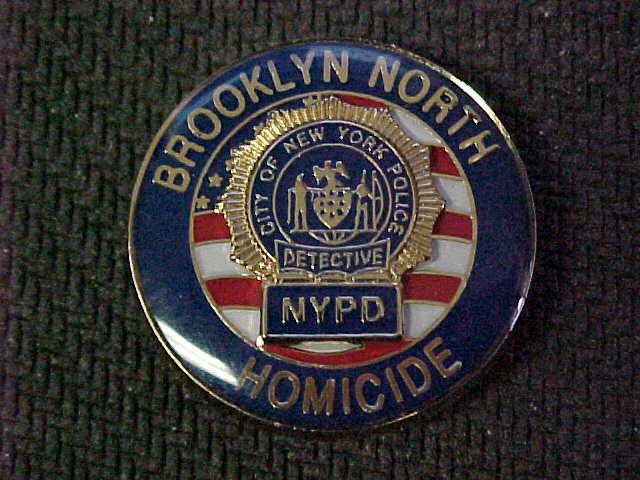
Monday, June 12, 2006

�Things are not always as they appear to be. Keep an open mind, conduct a thorough investigation, and remember that teamwork is essential�.
Vernon Geberth, Practical Homicide Investigation

ANOTHER FRIEND WALKS OFF � LOUDLY

I am at a loss, and the department will sorely miss, as MARK POURIA has performed his last tour of duty for the NYPD. Mark has left us for retirement � albeit a forced one due to a medical condition � but way too soon nonetheless.

I will forever recall the good times and laughter we shared, with Mark working with me in the 77 Squad as my RAM Sergeant, helping me to ease into the role of the squad commander at the same time. While everyone who knows Mark affectionately refers to him with the apropos nickname, LOUD, I refer to him as my �brother� � more than just that of the co-worker, �brother officer� term, but the more heartwarming �brother� so few others share.

Mark most recently has been the mucilage that has helped keep the 75 Squad running smoothly, an asset and an aid to Paddy Johnston now, and Joe Ferrara before him. A true leader in every sense of the word.

Not that Mark didn�t know how to enjoy work.

Working with Mark would always assure you of two things � the work would get done in an extremely competent manner, and you�d have a good time getting there. Can anyone who has worked with Mark deny this?

When Mark learned of a growth on his heart some time ago, and that treatment would involve his use of blood thinners for the rest of his life, he realized that way too soon his NYPD career would come to an end. Too bad; there�s much more positive work coming out of Mark than over half the MOS around. To say that Mark will be missed does not say enough.

I just feel badly for all the people that will be affected by his departure � and his new found freedom of time, for as long as it lasts. Mark will surely become an excellent worker very soon for someone else � he can�t stay �retired� for long � but in the meantime he�s sure to take advantage of this free time.

I suggest Jimmy Leake stock up on food and drink in his bagel store, as Mark will surely become a more frequent visitor to our younger brother at his shop. The bagel staff at the nice little bagel shop next to Suffolk�s 1st Precinct will understand very clearly why Mark is known to most as simply �Loud�.

It was fitting that Mark, who started his career on patrol in the 75 Precinct, to perform his last tour of duty in the 75 Squad.

Missed: every day. Forgotten: never.

Be well and stay safe, my brother, and best wishes in your next career.


INTERESTING WEB SITES

Here�s an interesting site to check out.

http://www.oihweb.com/

This link is applicable for anyone who does online investigative or
Intelligence research.


FROM THE DEATH INVESTIGATORS NOTEBOOK

OVERKILL:

In some attacks, the level of violence is particularly pronounced.

Overkill is often seen with several categories of assailant: intimate relationship to deceased (spouse/significant other), stimulant drug use (cocaine, amphetamine, etc), and
psychological disorder (schizoid).

The concentrated attack to the face may suggest a form of depersonalization and/or a direct attack targeted at this specific individual and may suggest the victim was well known to the assailant.


ANOTHER STICKUP ARTIST TALE

I received this tidbit from a retired MOS who spent time in the 77 Squad as its squad commander, years back, and who is also a friend of Retired Det Captain Frank Bolz, a regular reader and contributor to this site.

Roger Zimmermann notes that he came onto the department in 1955, in the class after Frank Bolz. In addition he retired from the 77th Squad where he was its squad commander, and then ran a training facility attached to a community college where Frank and Harvey Schlossberg presented programs on Hostage Negotiations.

Here�s a little tidbit for another of those �You Can�t Make This Stuff Up� categories.

In the 77th Precinct, several years ago, there was a stickup man by the name of Bobby Jones.

His specialty was robbing gas stations.

He would give the attendant, when there were attendants, a note saying: "this is a hole up. gimme all your money." He would then sign the note, Bobby Jones.

In the detective squad at that time there was a Street Name file � handwritten index card type, way before computers. The gumshoes looked up his name, and sure enough, there he was.

Contacting him with a ruse to come into the squad office, he was asked to come in and when he did, he was asked if he would write a note for them. "Sure," he said, "I ain't got nothin' to hide."

He was asked to write: "this is a hold up, give me all your money." He complied writing "this is a hole up, gimme all your money," and, without being asked, he signed his name.

Tag, Bobby, you're it.


TIP ON REVERSE PHONE NUMBER INQUIRIES

You can conduct a basic reverse telephone number inquiry rather quickly, on your cell phone, through a recent service that Google has added.

Most telephones (other than those provided by the NYPD) can perform �Text Messaging�. This reverse phone search is conducted through a text-messaging message sent to Google at a special location established for this purpose.

Google has established a �short code: to provide this information.

This short-code, the location that you send the message �To�, is: 46645

Type in the �To� section this number: 46645

Then, in the �Message� section type in the phone number, including the area code and dashes, of the number you are seeking the reverse look-up. The phone number should look like this in the �message� section:

212-555-1234

You will receive, in a short time, the results of this reverse phone search. Keep in mind, though, that this search utilizes white pages and yellow page directories, and is NOT a web-based search.

Results may be limited to those phone numbers that are listed, however, it may be helpful to you.


NOTES ON FASHION

I received a nice response from Retired Det. Captain FRANK BOLZ after the last posting of this blog.

Frank commented on the fashionable detective piece, noting that there were definitely some problems with being a "fashionable detective" on the other side of the river, even back in the 60�s.

Brooklyn North gumshoe attire was always a sport jacket and slacks. After ripping the trousers of a good suit, even those with two pair of pants, most detectives retreated to inexpensive slacks, Those inexpensive slacks at that timer might have cost as much as $5.00 a pair! Nothing was sacred, even plaid pants were part of the wardrobe at times, but, he noted, they always wore the fedora.

It was Frank Bolz who noted in the past that when he was getting promoted to Detective he was told to �get a hat� before he went to see the Chief of Detectives. Of course, the �hat� referred to a classic fedora.

It was when Frank moved across the river to that island of Manhattan that he was exposed to they style of the Manhattan Sleuth. He noted that some Manhattan South Detectives even got manicures.

When Frank eventually got to be the 2nd -Second Whip (the one without the money) in the 17th Squad that he saw some pretty nice working conditions, a little different to what he had become used to in the Brooklyn North Detective commands.

After I mentioned referring to myself as an �Old Timer� Frank had to put me in my place, remarking how he must feel, one who was sworn in on December 31, 1954 � effective January 1, 1955, so that no one had to work on New Years Day. Retirement seems to be suiting Frank just well � something we all can look forward to in time.


FOLLOW UP TO THE FINNEGAN & FALLON CASE

A recent posting to this site noted an �In Memoriam� entry on the line of duty deaths of two detectives, on May 18, 1962, Det Luke Fallon & Det John Finnegan, both of the 70 Sqd, who were shot in a robbery.

Frank Bolz commented his recall as being a young Detective in the 81 Sqd, being on vacation, and responding "off duty" with about 90 to 100 other Off-Duty detectives to assist in the case.

Al Seedman, who would later rise to become Chief of Detectives, was the Detective Captain who was pictured in a local paper, after the arrest was made, holding Jerry Rosenberg, the killer, by the hair. Seedman caught hell for that, and was help up being promoted to DI.

There was no overtime pay in those days, though there was always a lot of "over time" on your cases until you made a collar.


MORE OF PHILIP MARLOWE�S GUIDE TO LIFE

Here are some more of the classic gumshoe Philip Marlowe�s insight on life. Marlowe is the quintessential American detective of hard-boiled detective novels, written by Raymond Chandler, and glorified in both writing and on the big screen.

On Women�s Clothing:

�She was wearing a white wool skirt, a burgundy silk blouse and a black velvet over-jacket with short sleeves. Her hair was hot sunset. She wore a golden topaz bracelet and topaz earrings and a topaz dinner ring in the shape of a shield. Her fingernails matched her blouse exactly. She looked as if it would take a couple of weeks to get her dressed.� (The Little Sister)

On Trouble:

�Terry Lennox made me plenty of trouble. But after all, that�s my line of work.� (The Long Goodbye)


TIPS ON RESTORING DRY CIGARS

Detectives have been known to smoke a few cigars in the past, as they have worn a fedora. Some things may change, evolve as it may, but I still know plenty of detectives who smoke cigars. (a lot fewer who still wear a fedora, but more on that later!)

Here�s some advice on restoring dry cigars.

One of the most important steps in restoring dry cigars is patience, and lots of it.

It�s always good to remember that if moisture can escape from a cigar, it can be put back in it. If a cigar is dry it can be revived, but it may be difficult. The most important thing to remember is that this is a slow process, and the cigars need to go through a couple of phases of thawing and/or a slow introduction back to humidity before it can be put into a functioning humidor or exposed to any sort of higher humidity
levels.

Some people store their cigars in the freezer. This is something that many people do but is not advisable as it can easily damage a cigar.

Freezing cigars prevents aging, it will dry them out and the cigars will need to be returned to normal temperature slowly before they can be smoked, (otherwise they could
split or crack).

The cigars should have a solid two to three weeks at the proper temperature in a humidified environment before lighting them up in order to ensure the best possible smoking experience.

Restoring dry cigars can be done, but even with effort, in the end they may not be as good as they could have been if stored properly in a humidified environment from the beginning.

After taking a cigar from the freezer, put it in the refrigerator. This will allow it to thaw
at a slower rate, putting less risk on damaging the cigars.

After the cigars have been in the refrigerator long enough to thaw, take them out and put them in Tupperware or plastic bag and let them come up to room temperature.

After that is achieved, you can add a damp towel or let them rest in a slightly dry
humidor for a few days so the cigars can start to absorb some of the humidity. If using a humidor go back and fill the humidification system only part way, letting the cigars rest for another week before fully charging the humidity regulator. This method ensures a slow absorption of moisture, preventing the cigars from getting too much humidity too soon, which can result in splitting or cracking making the cigars un-smokeable.

If you don�t store your cigars in a freezer and they dried out at room temperature, a great method is to place a box inside a plastic bag. Be sure the bag is not completely closed because some airflow is actually desired.

A dampened sponge with water or 50/50 solution should be placed in the bag.

This process can take several weeks or a month. Rotate the cigars every few
days, bringing the ones on the bottom to the top, etc. If this is done properly
the result is usually successful and pleasurable.

If a cigar box is not available, other containers like Tupperware may be used. Put the dry cigars in the container and seal it for a couple days - this traps any moisture left in the cigars.

On the third day a damp sponge can be added, but don�t over-saturate the sponge so the cigars become moist too quickly. Keep the lid propped open in one corner so air can circulate.

When cigars lose moisture, they also lose much of their bouquet, and which together results in a cigar not tasting as good as one that has been properly humidified.

The most important factor that needs to be reiterated, is this is a slow process. With patience the wait is usually always worth it.


�LEST WE FORGET�� THE NYPD MEMORIAL

June 2, 1973 PO Robert Laurenson, 20 Pct, Shot- robbery
June 2, 1989 PO Jeff Herman, 71 Pct, Shot- investigation
June 2, 1853 Det George Trenchard, NYMunicPD, Fire rescue
June 3, 1938 Ptl James Fisher, 73 Pct, Shot- accidental discharge
June 4, 1927 Sgt Benjamin Cantor, DetDiv, Shot- robbery arrest
June 4, 1932 Ptl Thomas Burns, McyUnit, Injured on patrol
June 5, 1973 PO Sid Thompson, TD12, Shot- arrest
June 6, 1939 Ptl Emmitt Cassidy, 120 Pct, Shot- off duty incident
June 8, 1958 Ptl Herman Corn, 52 Pct, Auto accident on patrol
June 9, 1931 Sgt William O�Shaughnessy, 28 Pct, Shot- robbery in progress
June 9, 1939 Ptl Alexander Stult, ESU, Asphyxiated during rescue
June 9, 1969 Sgt Edward Henninger, AIS, LOD Heart Attack
June 11, 1925 Ptl James Cullen, 37 Pct, Motorcycle accident on patrol
June 12, 1991 PO Kenneth Hansen, Harbor, Drowned
June 14, 1960 Ptl William Ramos Jr, 80 Pct, Shot- robbery
June 15, 1944 Ptl Eliote Holmes, 13DetSq, Line of duty injury
June 15, 1967 Ptl Walter Ferguson, DetDiv, LOD heart attack
June 15, 1979 PO Ted Donald, PSA7, Shot- burglary arrest
June 15, 1980 PO John Patwell, 43 Pct, Assaulted
June 15, 1983 PO John Mandia, 25 Pct, Fell under train
June 15, 1984 PO Juan Andino, 40 Pct, Shot- robbery arrest